
Getting the Heat Right: Why Standard IR Lamps Usually Fail in Glass R&D
If you’ve ever tried to develop new glass materials using off-the-shelf infrared lamps, you know the frustration. Most companies just sell you a tube based on its length or total wattage. But in a lab, that’s not really what matters. The real secret is how that power actually hits your material. Total wattage is just a number;distributionis what gets you the results you need.
Shaping the Heat
We don’t just chop tubes to a certain length and call it a day. Instead, we play around with the filament winding and current density to build a specific power profile. Think about it: if your glass sample needs a hot core but tapered edges to keep it from cracking under thermal shock, we can make that happen. You tell us exactly how many watts per centimeter you need. It’s the difference between a perfectly cured sample and one where the edges are burnt to a crisp while the center is still cold.
The Quartz Factor
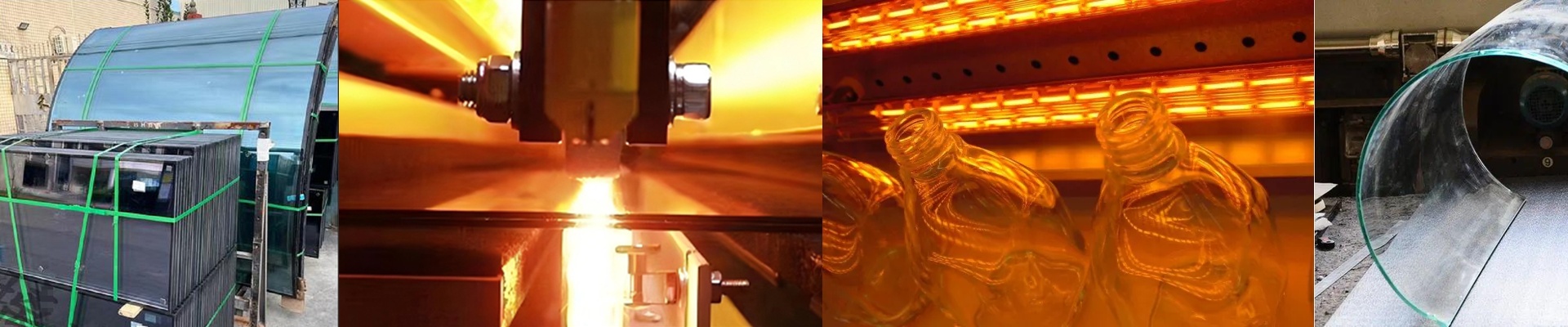
We stick with short-wave IR for glass work because it actually gets into the material. It doesn’t just sizzle the surface; it soaks in. To make that happen, we use high-purity quartz envelopes so the heat can pass through without getting blocked. But here is a heads-up: when you cram a lot of power into a small space, the ends of the lamp take a beating. If you’re pushing for extreme density in a short footprint,you need active coolingin your housing. If you don’t, you’ll fry your seals and your lamp’s lifespan will plummet.
Lab Gear That Actually Fits
We get that lab setups are often a puzzle. Maybe you have a specific power supply you’re stuck with, or a tiny footprint that requires a weirdly shaped connector. We can handle that. Just send us your drawings and we’ll build it to fit. We take care of the physics of the heat transfer so you can spend your time focusing on the glass itself. At the end of the day, you just need a tool that behaves the same way every single time. That’s the only way to get data you can actually trust.