
How we actually handle heating for thick glass cutting tunnels
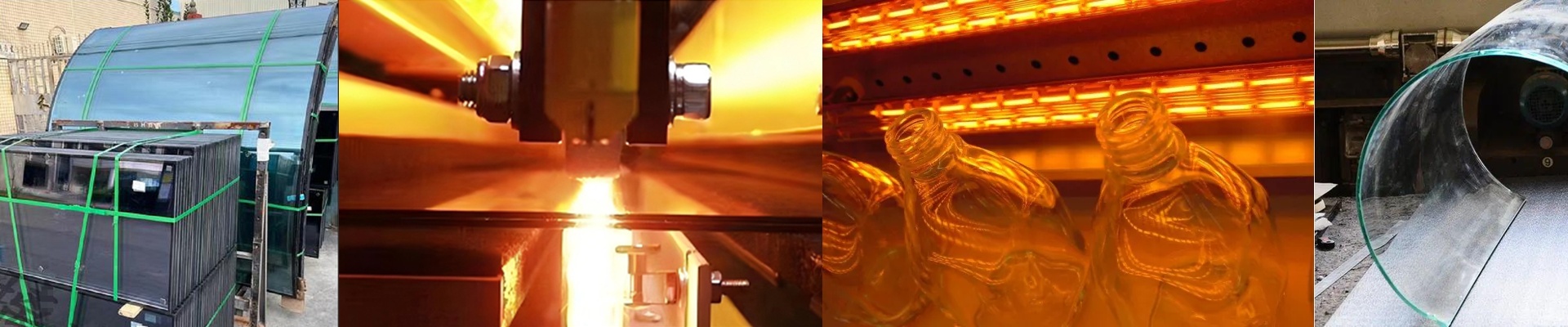
Cutting thick glass is a nerve-wracking process. If you don’t get the thermal stress just right, the glass doesn’t just crack—it shatters in ways you can’t control. For those massive tunnel kilns, standard infrared lamps usually aren’t enough. You end up with these annoying cold spots that ruin your yield. That’s why we build continuous infrared units that stretch over 2 meters. It just makes more sense.
The struggle with heat distribution
Here’s the thing: when you push a heating element past the 2-meter mark, voltage drop becomes a real pain. You can’t just stretch a standard lamp and hope for the best. We spend a lot of time dialing in the wattage and voltage. Why? Because we want the heat to be exactly the same at the very last centimeter as it is at the first. Otherwise, you get that “bow-tie” effect where the center of the glass is scorching but the edges are barely warm. We stick to a continuous layout. By lining these units up in one long, unbroken row, we get rid of those gaps you usually find in modular setups. No gaps, no cold spots. Simple.
The gritty details: Materials and Sag
We use high-purity quartz for the tungsten filaments. Since we’re dealing with thick glass, we go with short-wave infrared. It digs deeper into the material and works much faster than long-wave radiation. But there’s a physical problem we have to solve:sag. A 2-meter tube gets soft when it’s glowing hot. If it bows under its own weight, the distance between the lamp and the glass changes. That ruins your heat flux and gives you uneven cuts. To stop this, we use reinforced support brackets to keep everything perfectly parallel.
Making it work in the real world
Wiring these things isn’t a delicate process. We use heavy-duty connectors because factory floors are rough. You’ll also want to double-check that your power supply can handle the full load of a continuous array without tripping your breakers every ten minutes. And one last tip: these units put out a massive amount of heat. If your exhaust system isn’t beefy enough to move that ambient air, the housing will just soak up the heat. Before you know it, your wiring is frying. Make sure you’re venting properly, or you’re just building a very expensive oven that will eventually burn itself out.