
Why Your Glassware Keeps Breaking (And How to Stop It)
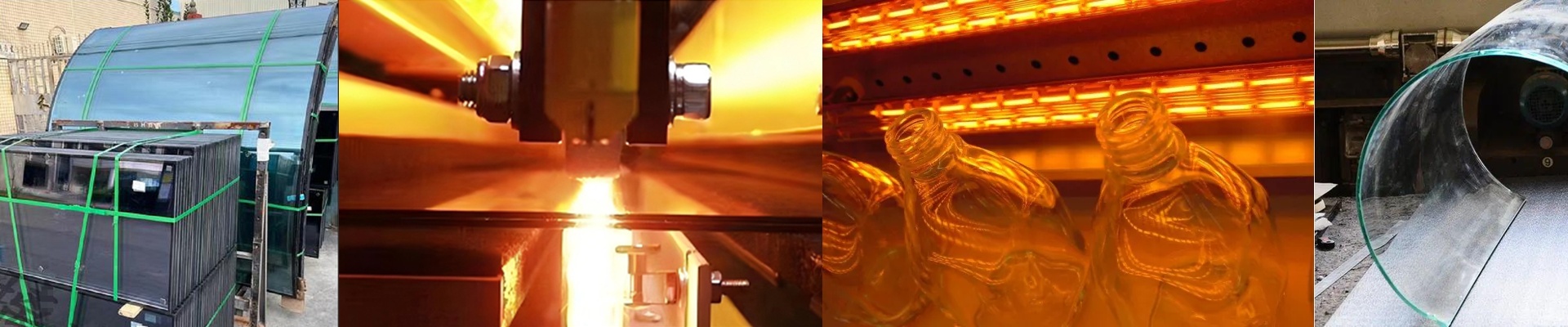
Ever had a piece of lab glassware just… snap? It’s frustrating. Usually, it happens because of internal stress that didn’t get cleared out during annealing. To fix that, we use infrared heating elements to hit that sweet spot where the glass stabilizes without losing its shape.
The struggle with 0.1°C
Here’s the thing: glass is terrible at conducting heat. If your furnace swings by even a few degrees, you end up with a temperature gap between the outside and the core of the vessel. That gap locks in stress. Then, the moment you introduce a vacuum or a chemical reaction, the glass gives up and shatters. It’s a nightmare. That’s why we use IR elements that can nail a 0.1°C precision. By pairing high-frequency PID control with fast-response emitters, we keep the glass in a very tight window. No spikes. No “overshooting” the temperature. Just a smooth, steady soak.
Why standard heaters don’t cut it
Most resistive heaters are just too slow. They rely on moving air, which always lags behind. Our IR setups are different. They use direct radiant energy, which lets us ramp temperatures up and down with surgical precision. It’s a much cleaner process. But you can’t just throw these in and hope for the best. You need high-grade thermocouples. If your sensor drifts, that 0.1°C precision is basically a fairy tale. We’ve found that a three-zone sensor setup works best. It ensures the neck, the middle, and the base all hit the same temperature at the same time.
The “hidden” cost of precision
There is a catch, though. High-precision IR heating is hungry for power. These elements need a rock-solid voltage to stay within that tiny 0.1°C tolerance. If your factory floor has power fluctuations, you’re going to see it in your stress tests. You really need a dedicated voltage stabilizer to keep the output flat. Without one, the IR lamps will flicker. It sounds minor, but those tiny micro-cycles of heating and cooling can compromise the whole piece of glass. Not worth the risk.