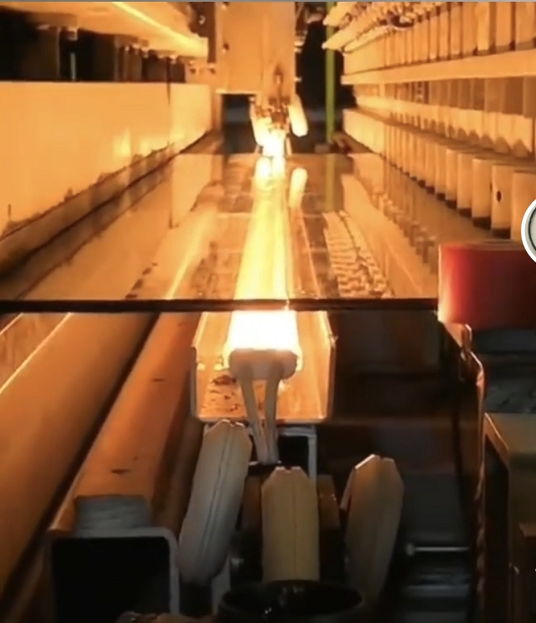
Getting Low-E Glass Preheating Right (When You’re Working with Huge Sheets)
If you’re trying to preheat Low-E glass on a wide-format line, you know the struggle. You need heat that hits the surface fast, but if you overdo it or hit it unevenly, you’re looking at warped glass. The real headache starts when your lines go over 3 meters wide. At that point, the stuff you buy off the shelf just doesn’t cut it. That’s where we come in. We build custom infrared units specifically to fill those gaps. The struggle with scale Scaling a heating element up to 3 meters isn’t as simple as just making it longer. You run into two big problems: voltage drop and the whole thing becoming fragile. If you aren’t careful, the ends of the lamp run cooler than the middle, and you end up with uneven heat. We fix this by dialing in the wattage and voltage so the heat stays consistent from edge to edge. We also use high-grade quartz tubing so the thing doesn’t snap. And here’s a pro tip: the filament has to be perfectly centered. If it shifts, you get hotspots, and those hotspots will burn your lamp out way faster than they should. Speed is everything We use shortwave infrared for these units. Why? Because it’s fast. Really fast. Shortwave radiation sinks into the glass almost instantly. In a high-speed Low-E line, you don’t have time to wait around for the glass to warm up. To keep everything stable over that 3-meter stretch, we house the lamps in reinforced frames so they don’t sag over time. The practical side of things We design these to be drop-in replacements for your current oven banks. We also use industrial connectors—because the last thing you want is a wire failing just because it went through a few heat cycles. But let’s be honest about the trade-offs. These ultra-long units pull a massive amount of current. Before you plug them in, double-check your power supply and cabling. If your wiring is too thin, you’ll get voltage sag. And if your cooling system can’t handle the ambient heat coming off a 3-meter radiator, your control panel is going to trip the thermal overrides. My advice? Use dedicated circuit breakers for each heating zone. That way, if one lamp decides to quit, it doesn’t kill your entire production line.