

Dealing with Cold Spots in Glassware Annealing
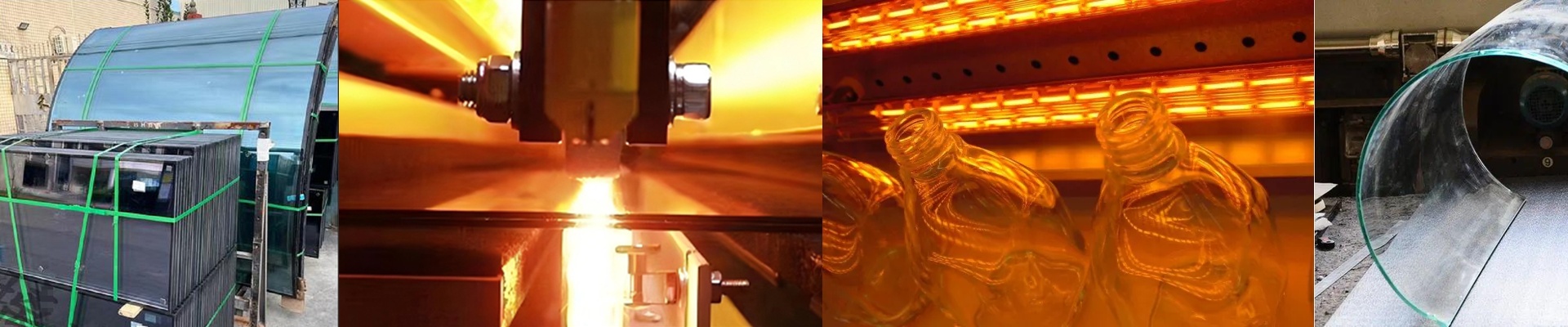
Ever had a piece of complex glassware just… snap? It’s frustrating. Usually, it happens because of “cold spots” during annealing. When you’ve got weird shapes and tight angles, some parts of the glass just don’t get the heat they need. That creates internal stress, and eventually, the piece gives up. To fix this, we use long-life infrared heating tubes. Instead of just hoping the air gets hot enough, these tubes push high-density radiant heat directly into the glass, wrapping around those irregular shapes to make sure every single inch hits the right soak temperature.
Getting heat where it actually needs to go
Standard convection heating is great until you hit a narrow neck or a deep base. Then it just fails. Infrared is different because it travels in straight lines. By setting these tubes up in a multi-angle array, you can basically bounce heat into those annoying, hard-to-reach crevices. And because we build these for stability, you won’t find yourself swapping them out in the middle of a cycle.
The grit and the gear
We use high-purity quartz for these tubes. Why? Because it can take the shock of rapid heating and cooling without cracking. Inside, the filament is calibrated specifically so you don’t get “hot-spotting” on the surface of your glass. One quick tip: make sure your power supply matches the tube’s voltage. If you go with a higher voltage setup, your wiring can be thinner and you’ll pull less current across your kiln banks. Just keep an eye on your insulation. If you’re cranking up the heat density, your insulation needs to be up to the task, or you’re just throwing energy away.
Keeping things running
These are drop-in replacements, so they’re easy to install. You can hook them right up to your existing PID controllers to handle your ramp-and-soak profiles. But here is the thing: quartz is tough, but it hates grime. If oils or salts get on the tube, they bake on. That creates a tiny, intense hot spot that can burn out the filament way too early.**Keep them clean.**It’s the simplest way to make sure you get the full life out of the tubes.