
Introduction
Let’s talk about USB-powered electric heaters—specifically, those infrared heating lamps. If you’re an engineer or a facility planner, you know the goal is simple: warm the room without blowing the power budget. The real puzzle in a bathroom is matching the heater’s output to the room’s size and how quickly it loses heat.
Power, Voltage, and Footprint—Keeping It Real
Infrared heaters shine because they warm surfaces and people directly, instead of fussing with the air. That’s a big win in bathrooms, where air just sits there. To make it work efficiently, you need the wattage to match the square footage. A 150W lamp is perfect for a small bathroom—think under 4m². Step up to 250W for medium spaces, around 4–6m². If you’ve got a larger bathroom, start with 400W. Go too small, and the room never gets cozy—the unit just keeps cycling on and off, wasting energy. Go too big, and you’re wasting power and shaving years off the lamp’s life.
What’s Inside—And Why It Matters
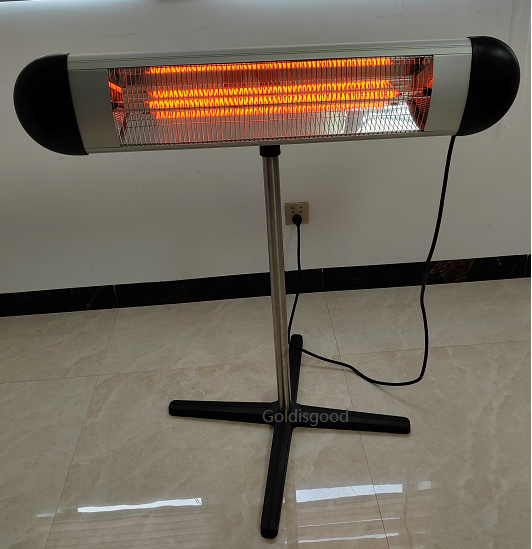
At the heart of these heaters is a quartz tube with a halogen element inside. The quartz handles sudden temperature changes like a champ, so the lamp can turn on and off without cracking. Meanwhile, the halogen keeps the filament at a steady temperature, so the heat stays consistent. The USB connection makes wiring a breeze. No need for thick cables or dedicated outlets—just plug it in and go. And the compact size means it fits into tight corners without taking up space.
How It Feels in the Real World
Here’s the payoff: you get heat exactly where you need it. That immediate, radiant warmth makes the room feel cozier, which means you can keep the air temperature lower. That translates to lower energy use, plain and simple. Now, there’s a trade-off—heat density. A 400W lamp throws off a lot of localized heat, so you need to plan for clearance and ventilation. The surface can get hot enough that a protective guard makes sense. Pair it with a thermostat, and you avoid overheating while keeping things steady and comfortable. Choosing the right wattage isn’t just about comfort—it’s about managing the load. Match the lamp to the room, and you get a system that heats quickly, holds temperature, and keeps energy costs under control.